GenAI and the Changing Value of Human Talent
Reflections from my recent session at Chulalongkorn University
Last week was packed with meaningful events, but one that I hold closely is the opportunity to contribute to the “AI and the Law” course at Chulalongkorn University.
This blog captures one of the key reflections I shared during that session — a topic I believe deserves further conversation: the impact of Generative AI on the labor market.
What I share below reflects my own observations from the field. I don’t claim this is the full picture, but I do think it’s worth considering.
What I share below reflects my own observations from the field. While I apparently cannot claim this is the full picture, I do think it’s worth considering.
GenAI and the Uneven Impact on the Job Market
Early on, many of us assumed AI would affect jobs in a relatively uniform way. But nearly two years into GenAI’s broader adoption, a more nuanced pattern is becoming clear: the impact appears to fall more heavily on entry-level roles than on mid-career professionals.
In my view, this is due to two key factors:
- Experience amplifies GenAI’s value.
Using GenAI well isn’t just about typing a prompt — it’s about knowing what to ask, and what “good” looks like. That judgment is shaped by having done the work yourself, by seeing outcomes, and by learning from missteps over time. - Even more experience is required to validate AI output.
GenAI tools generate fluent, confident responses. But fluency is not the same as accuracy or relevance. It takes domain knowledge — often built over years — to sense what’s missing, what won’t land with stakeholders, or what simply doesn’t fit the context.
So while GenAI is often described as democratizing access to knowledge work, it’s also contributing to the commoditization of certain foundational tasks — the kind that traditionally helped early-career professionals build craft, context, and confidence.
These tasks still exist, but they’re increasingly being handled — at least in part — by machines. And that shift is not just technical; it’s developmental. It challenges how we think about growing talent, creating learning curves, and preparing the next generation of leaders.
What This Means for First Jobbers
This doesn’t mean there’s no value left for early-career professionals. But I believe the definition of value is shifting.
Success is no longer just about doing what you’re told or passing the ball forward. It’s about taking initiative. Driving progress. Owning the outcome.
In this new landscape, I believe the most enduring strengths will be very human ones:
- Curiosity
- Passion
- Energy
- Engagement
- Critical Thinking
- Empathy
These are not simply soft skills — they’re differentiators. They are what allow individuals to lead teams, challenge assumptions, and navigate ambiguity in ways that AI cannot.
For early-career professionals, this shift presents both a challenge and an opportunity. Rotational exposure, mentorship, and early involvement in decision-making can accelerate the development of judgment — something no AI can replicate.
Looking Ahead
To be clear, I see GenAI not as a threat, but as a multiplier.
When paired with the right human talent, it boosts productivity, reduces drudgery, and unlocks new capabilities. But like any tool, its effectiveness depends on who’s using it, and for what purpose.
Organizations don’t just need people who can use AI. They need people who can lead with it — who can see the bigger picture, make the tough calls, and navigate complexity with clarity and conviction.
And in that context, I believe this:
"The ability to become the future human leader in the organization — is a rare gemstone that any organization would invest over AI."
These are just my observations, shaped by what I’ve seen so far. But I hope they help contribute to a broader conversation — about the future of work, how we grow talent, and where we place long-term value in an AI-driven world.
Continue Reading
See more
Get to know Generative AI in-depth insight
Generative AI (Artificial Intelligence) is a category of technology developed to automatically generate new data and content from existing information, ...
Mar 4, 2026
LLMs are stateless – It Forgets Everything Unless You Build Around It
Large Language Models are stateless — they forget everything between interactions …
Mar 4, 2026
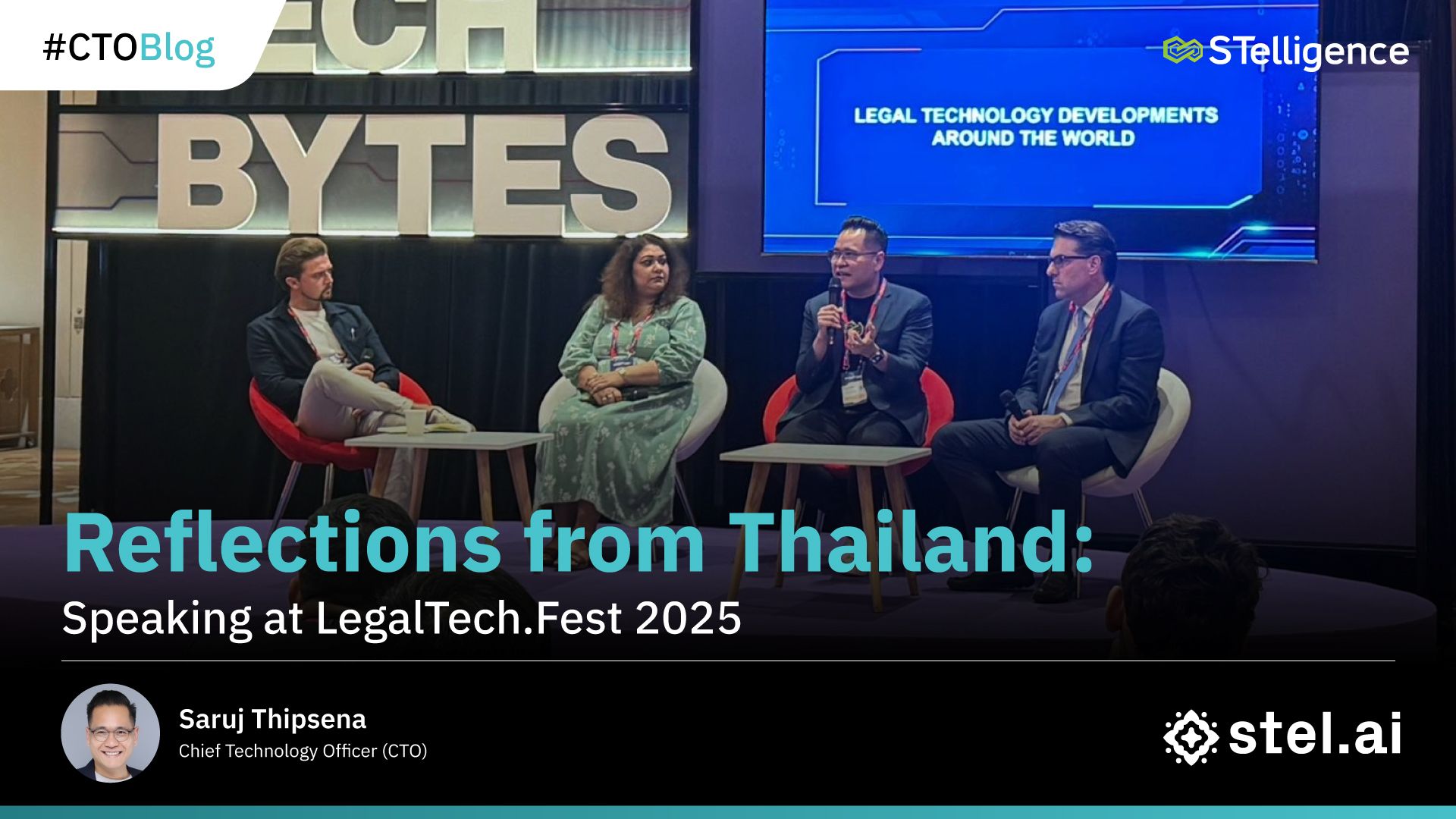
Reflections from Thailand: Speaking at LegalTechFest 2025
Last week, I had the honour of speaking at LegalTechFest 2025 in Singapore...
Mar 4, 2026